
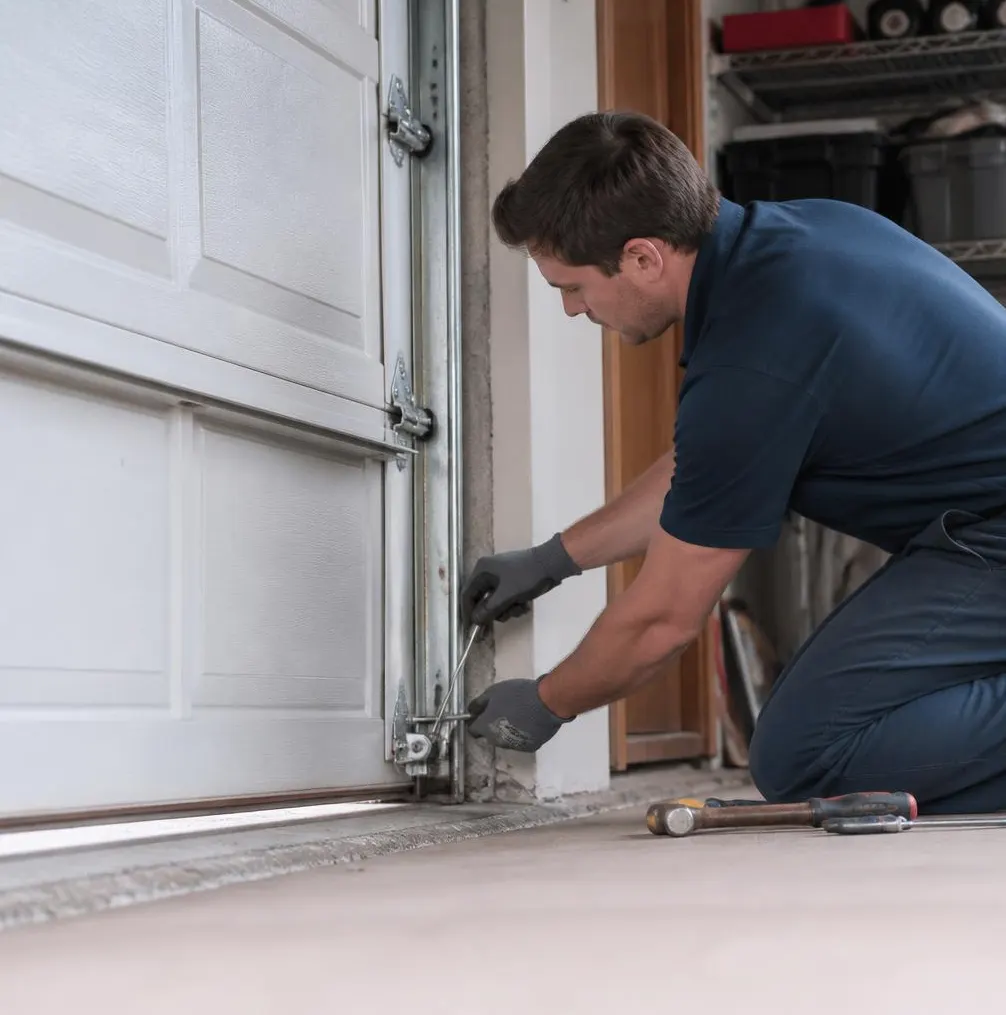
Here's the rule of thumb that settles most garage door arguments between landlords and tenants: the landlord owns and maintains the garage door system as part of the structure, while the tenant is responsible for reporting problems promptly and for damage caused by misuse. Like most rules of thumb, it has exceptions, and those exceptions are where most disputes actually happen.
The Basic Rule, Explained
Think of the garage door system the same way you'd think about the water heater or the HVAC unit. It's a major mechanical component of the property, not a tenant's personal appliance. That means the landlord generally pays for things that fail from normal age and use: a spring that finally gives out after thousands of cycles, an opener motor that burns out, cables that fray, or rollers that wear down a track over time. The tenant's job is simpler but just as important: use the door normally, don't force it when it's stuck, and tell the landlord right away when something sounds or feels wrong.
Exceptions That Shift the Responsibility
- Lease language wins. If the lease specifically assigns remote battery changes, bulb replacement, or basic upkeep to the tenant, that clause overrides the general rule.
- Tenant-caused damage. Backing a car into the door, forcing a door that's stuck instead of reporting it, or leaving the door open during a storm that causes water or wind damage inside the garage typically falls on the tenant.
- Ignored warning signs. A door that's been grinding, sagging on one side, or slow to respond for weeks without being reported can turn a cheap fix into an expensive one. Landlords sometimes argue that delayed reporting shifts part of the cost onto the tenant, and leases often back that up.
- Tenant-installed extras. Decorative hardware, paint, or aftermarket keypads a tenant adds are usually the tenant's cost and the tenant's to remove.
- Pre-existing conditions. Anything documented at move-in stays the landlord's responsibility to resolve, no matter how far into the lease it is before it finally fails.
The Move-In Walkthrough: What Both Sides Should Check
Most arguments months later trace back to a walkthrough that never happened. A ten-minute check at move-in, documented in writing and photos, settles almost every future disagreement.
- Open and close the door from both the wall button and any remote, listening for grinding, hesitation, or uneven movement.
- Test the safety reverse: wave a broom handle through the photo-eye beam near the floor while the door is closing and confirm it reverses immediately.
- Check spring tension by disconnecting the opener and lifting the door by hand halfway. It should stay put on its own. If it drops or shoots up, the spring is already worn, and that's a repair for a trained technician, not a DIY project.
- Look at the tracks for rust, dents, or gaps wide enough for a roller to jump out.
- Check the weatherstripping and bottom seal. A cracked or flattened seal is a maintenance issue that predates the tenant, not something caused by them.
- Photograph every dent, rust spot, and frayed cable with a timestamp before anyone signs paperwork.
Why the Climate Makes This More Than a Paperwork Question
Hillsborough County's humidity pushes rust onto springs, hinges, and tracks faster than it would in a drier climate, and the swelling and shrinking of panels through wet and dry stretches can throw a door out of alignment even if no one's touched it. Wind-load rules matter too. If a rental's garage door isn't built or rated to handle hurricane-season wind, that's a structural problem the landlord needs to address before storm season, not something to leave for a tenant to figure out mid-lease. With the 2026 hurricane season winding down, it's a good time for landlords to walk the property and check for storm-related damage that may not have been reported yet, like a track bent by wind-driven rain or a door slammed shut in a hurry and knocked off its rollers.
When to Call Seffner Garage Door Repair
If a landlord and tenant can't agree on whether an issue is normal wear or tenant-caused damage, get a written diagnosis before anyone pays for anything. Seffner Garage Door Repair can inspect the door on-site and explain the cause in plain terms, whether that's Garage Door Spring Repair on a door that's suddenly too heavy to lift by hand, or Off Track Door Repair after a door gets knocked off its rails in a storm. A documented diagnosis is useful for a lease dispute, an insurance claim, or just for ending an argument at home.
If you're moving into or out of a rental in Seffner, FL, call Seffner Garage Door Repair for a move-in inspection or a diagnostic before anyone signs anything.